
Last updated:
A furniture showroom owner in Delhi spends ₹60,000 a month on Instagram posts, a billboard and a newspaper insert. Sales go up some months and down others, and nobody can say which rupee did what. Then a friend suggests “performance marketing,” and the agency pitching it promises that “you only pay for results.”
That promise is half true, and the half that is not true is where business owners get burned. So what is performance marketing, really? This guide explains what is performance marketing in plain English, how it differs from regular digital marketing, which channels it covers, and how to decide if it suits you.
Key Takeaways
- So, what is performance marketing? It is advertising you judge by measurable actions, such as leads, calls or sales, rather than by reach or impressions.
- In its strict form, you pay only when a defined action happens. The Performance Marketing Association lists a sale, lead or click as examples of that action.
- In practice, most Indian small businesses pay per click on Google or Meta and then measure the leads that follow. You pay for the traffic, not the sale.
- What is performance marketing at its core? A payment and measurement approach, not a separate channel. Search ads, social ads and affiliate programmes can all be run this way.
- It only works if conversion tracking is set up first. Google says tracking helps you learn which keywords, ads and campaigns drive valuable customer activity.
- Start only if you have a clear offer, a landing page that works and a way to follow up leads quickly.
What Is Performance Marketing?
Performance marketing is a way of running online advertising where you set a measurable goal, such as a lead or a sale, and judge every campaign by whether it delivers that goal. In its strictest form, you pay partners only after the action happens.
The Performance Marketing Association, a non-profit trade body, describes it as online programmes in which advertisers and marketing companies are paid when a specific action is completed, such as a sale, lead or click. When people ask what is performance marketing, the word that matters in that answer is “measurable.” If you cannot tell which action came from which campaign, it is not performance marketing, however it is labelled.
How Is Performance Marketing Different From Digital Marketing?
Digital marketing is the umbrella for everything you do online, while performance marketing is the part of it judged by hard, trackable results. Think of performance marketing as one way of running digital marketing, not a rival to it.
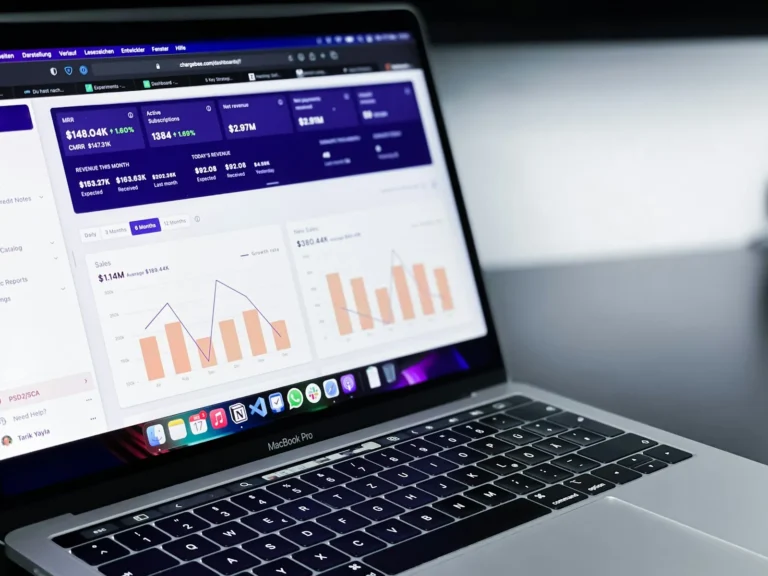
Here is how the two compare in practice:
| Brand or awareness marketing | Performance marketing | |
|---|---|---|
| Main question | Do people know us? | Did someone enquire or buy? |
| Typical measure | Reach, views, followers | Leads, calls, sales, cost per lead |
| Time to see results | Months | Days to weeks |
| Example | A festive Instagram reel series | A Google search ad for “dentist in Saket” that leads to a booking form |
A good small business plan usually needs both. Awareness makes people recognise you. Performance campaigns catch the people who are ready to act. If you are still asking what is performance marketing compared with the rest of your digital work, that split between awareness and action is the simplest way to see it.
Do You Really Only Pay for Results in Performance Marketing?
Not usually. The pure “pay only when a sale happens” model exists, mostly in affiliate programmes, but on Google Ads and Meta you normally pay per click or per thousand views, and the lead or sale is what you measure afterwards.
This is the part many pitches blur. The Interactive Advertising Bureau (IAB) wrote in 2013 that a campaign counts as performance marketing when it aims at consumer action, the link between ad and action can be measured, and the buyer can optimise quickly. It added that payment tied to the action is common but “not necessarily required.” That article is over a decade old, so treat it as a definition of the idea and not a description of today’s platforms. It still matches how ad accounts work today.
So when an agency says “performance-based,” ask one plain question: what exactly am I paying for, a click, a lead or a sale? The answer tells you who carries the risk, and it is the quickest way to test what is performance marketing in that agency’s own words.
What Are the Main Performance Marketing Channels?
The main channels are paid search, paid social, affiliate marketing and, increasingly, messaging-based ads. If someone asks what is performance marketing made of, this is the list. What the channels share is that you can track what each rupee produced.

- Paid search. Ads on Google for people already looking for what you sell. Google lists website, app and phone call conversions among the actions you can track, so a call from an ad can count as a result.
- Paid social. Ads on Facebook and Instagram, aimed by location, interest and behaviour. Meta describes its Pixel as a snippet of code that tracks visitor activity on your website, with tracked conversions used to measure ads and build audiences.
- Affiliate marketing. Partners promote you and earn a commission only when a sale or lead happens. This is closest to the textbook “pay only for results” model.
- Click-to-WhatsApp ads. Ads that open a chat with you. Useful for Indian local businesses because enquiries arrive where customers already talk. We cover that in detail in our guide to WhatsApp ads.
Organic channels like SEO are not performance marketing in the strict sense, because you do not pay per action. They can still be measured against leads, and they work well alongside paid campaigns.
How Does Performance Marketing Work, Step by Step?
You pick one goal, track it, run ads, read the numbers and shift money toward what produces results. Once you know what is performance marketing in theory, the workflow is simple, and the cycle repeats every week or two.

- Define the action. A form fill, a call over 30 seconds, a WhatsApp enquiry, a purchase. One main action per campaign.
- Set up tracking. Install the Google tag and the Meta Pixel and test that each action is recorded. Google says you need conversion tracking enabled to use Smart Bidding, the automated bid strategies like Target CPA and Maximize conversions.
- Launch with a small budget. Test two or three ads against one clear offer.
- Read the cost per result. If a lead costs ₹900 and one lead in five becomes a customer worth ₹8,000, you are doing fine. If it costs ₹900 and nobody follows up for two days, the problem is not the ad.
- Move budget. Cut the losers, feed the winners, and repeat.
One caution on automation. Google’s own guidance on Smart Bidding says to measure performance over a month or longer, with at least 30 conversions, before judging results. A campaign with eight leads in a week does not have enough data to prove anything.
What Is Performance Marketing in Practice? (Illustrative Example)
Take a dental clinic in South Delhi. These numbers are illustrative, not a client result, and show how to think about the arithmetic.

The clinic spends ₹30,000 a month on Google search ads for “dental implant cost Delhi” and “teeth whitening near me.” Say the ads bring 1,500 clicks at an average of ₹20 a click. About 60 people fill the enquiry form or call, so each enquiry costs ₹500. Of those 60, the clinic books 15 consultations and 5 become implant or whitening patients at an average of ₹12,000 each.
Revenue is ₹60,000 against ₹30,000 of ad spend, plus whatever the agency charges. That is a profit on the first visit alone, before repeat visits. Now notice where the decisions are. If only 5 of 60 enquiries get a callback within an hour, the clinic should fix its follow-up before raising the budget. If 40 of the 60 enquiries come from “teeth whitening” at a low value, shift money to implants.
None of that is visible without tracking calls and form fills against each keyword. That visibility is the real answer to what is performance marketing: not a cheaper way to advertise, but a way to see what each rupee did.
Is Performance Marketing Right for Your Business?
Knowing what is performance marketing does not mean it fits every business. It suits businesses with a clear offer, a short path from click to enquiry and the ability to follow up quickly. It is a poor fit if you have no tracking, an unclear offer or a sales cycle of many months with no way to link ads to deals.

It tends to work when:
- You sell something people search for or respond to quickly: clinics, coaching, real estate enquiries, local services, D2C products.
- You know roughly what a customer is worth, so you can say what a lead may cost.
- You can answer leads within the hour, by phone or WhatsApp.
Think twice when:
- Your website cannot take a booking or enquiry cleanly.
- You have no idea what a customer is worth.
- You want one campaign to fix a weak product or pricing.
If you are still deciding, begin with a small test of one channel for 60 to 90 days with a fixed budget and one target. The aim of that test is to learn what a lead costs, not to scale.
How Much Does Performance Marketing Cost, and What Should You Ask an Agency?
Cost has two parts: the ad spend that goes to the platforms, and the fee for whoever runs it. When a proposal arrives, check what is performance marketing in their wording: both lines should be shown separately, along with what the reporting will include.
Before signing with anyone, ask:
- What counts as a “result” in your reporting: a click, a form fill or a sale?
- Who owns the ad accounts and the tracking? (It should be you.)
- Is ad spend passed through to the platform at cost, or marked up?
- How often will you see numbers, and can you check them in the platform yourself?
- What happens if results are poor after three months?
At Leyscale Digital, ad spend is paid directly to Google or Meta and never marked up, and our tier pricing is published on the packages page. You can see how a campaign runs week to week on the How We Work page.
FAQ
What is performance marketing in simple words?
It is online advertising where you decide on a measurable goal, such as a lead or sale, and judge each campaign by whether it delivers. In the strictest form, you pay only when that goal is met.
What is performance marketing in digital marketing?
It is the results-tracked part of digital marketing. Digital marketing covers all online activity, while performance marketing focuses on campaigns whose leads, calls or sales can be measured and tied back to spend.
What is performance marketing vs digital marketing?
Digital marketing is the whole set of online activity, from SEO to email to ads. Performance marketing is the slice of it where every campaign is tied to a measured action and judged on that number.
Is performance marketing the same as paid advertising?
Mostly, but not exactly. Paid ads are the main tool, though affiliate programmes also count. What makes it performance marketing is the tracking and the focus on measurable outcomes, not just paying for ad space.
Is performance marketing only for e-commerce?
No. Clinics, coaching centres, real estate firms and local services use it too, with leads or calls as the goal instead of online checkouts.
How long does performance marketing take to show results?
You can see clicks and enquiries within days, but judge it over at least a month or two. Google suggests waiting for around 30 conversions before judging bidding results.
Do I need a big budget to start?
No, but you need enough to collect meaningful data. A small, fixed monthly test with one goal teaches you more than a large budget spread across many campaigns.
Want to See What a Lead Could Cost You?
If you still wonder what is performance marketing worth to your business, tell us what you sell and who you want to reach, and we will tell you plainly whether it makes sense for you now. Our PPC advertising service runs campaigns with tracking set up first, or you can get in touch for a straight answer.
This article is general information. Ad platform features and policies change often, so check current platform documentation before you set up campaigns.
About the Author